Bihar has long been confronted with an education crisis shaped by infrastructural gaps, limited access to quality learning, uneven teacher training and a lack of exposure to practical, skill-based education. Siwan, though rich in cultural heritage and community spirit, reflects many of these challenges. Students across the district often display remarkable enthusiasm to learn, yet they are held back by traditional rote-based systems, inadequate facilities and the absence of environments that nurture curiosity, confidence and holistic growth. Addressing these issues requires institutions that are willing to evolve, innovate and redefine what schooling looks like for today’s generation.
RK Model School had established itself at the hub of this transformation as one of Siwan’s older and more trusted educational institution. Founded with the aim of making structured and meaningful education accessible, the school has carried forward a legacy built on discipline, inclusivity, and community engagement. For years, it served as a dependable space where children received foundational learning in a safe and morally rooted environment. However, the school also recognized that real progress demanded moving beyond traditional methods to meet the changing educational needs of Bihar’s children.
A Turning Point: Leadership for a New Chapter
The appointment of Director Pameel Umar Haydri in the year 2025 brought significant shifts in the vision and functioning of the school. This turn of leadership, at just the right time, also saw the extra requirements for Bihar’s modernization in the schooling system. Under his guidance, RK Model School initiated a series of reforms that addressed the core issues contributing to the education crisis: outdated pedagogy, limited experiential learning, and the lack of holistic student development.
After this transformational change in leadership, the school reinforced its academic and administrative leadership with the appointment of Principal Dr. Syed Wasi Haider, former principal of Jawahar Navodaya Vidyalaya, with over 21 years of experience in heading schools. His experience in building disciplined, value-based, academically robust environments has brought another layer of stability and vision to RK Model School.
Under new management, RK Model School has aligned its academic approach with the National Education Policy 2020, particularly its focus on Foundational Literacy and Numeracy (FLN), experiential learning, and competency-based assessments. The school follows the NEP’s 5+3+3+4 structure, integrates activity-based foundational programmes inspired by the NIPUN Bharat Mission, and strengthens multilingual, child-centered classroom practices. With these reforms, RK Model directly helps address Bihar’s early-grade learning gaps and ensures that students grow with stronger skills, more confidence, and better readiness for higher-order learning.
Concomitantly, classrooms were redesigned as interactive, child-friendly spaces in which learning was less mechanical and more engaging. Teachers began participating in workshops, training sessions, and collaborative planning and thus were equipped with the skills needed to facilitate inquiry-based learning. Lessons moved beyond textbooks as students explored concepts through experiments, discussions, and real-life applications. These changes helped shift the emphasis from mere memorization to understanding-a critical step in addressing Bihar’s learning-level crisis.
Holistic and Inclusive Education: A Model for the Region
The different ways in which RK Model School is solving the education crisis include: developing in children the characteristics related to intellectual, emotional, social, and physical dimensions of development and growth. Their approach thus matches global standards that prioritize balanced development and wellbeing of students. Learning thus becomes inclusive and supportive, where RK Model School shall make all students from various backgrounds valued and deserving of achieving excellence.
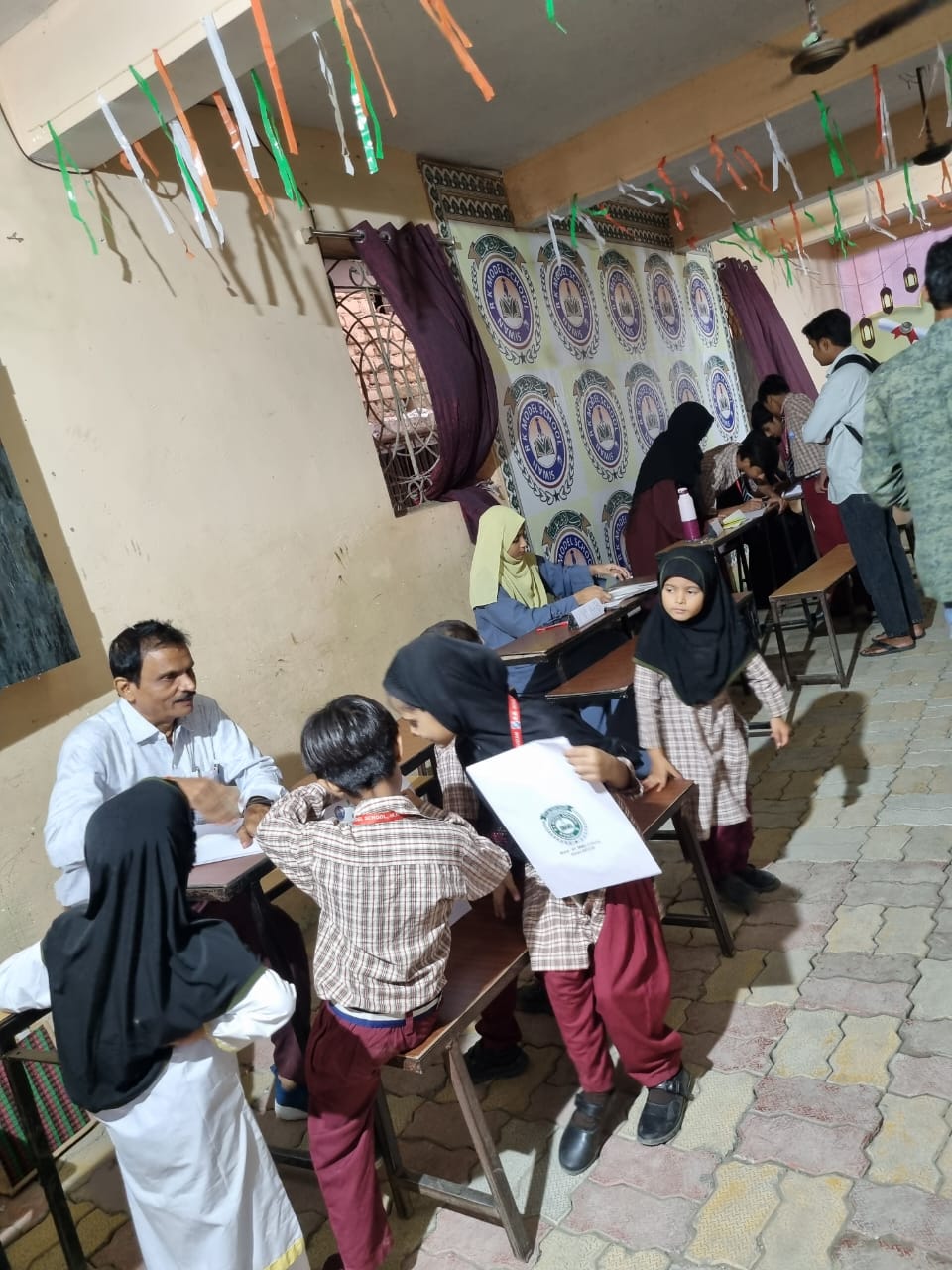
Regular academic exhibitions, science demonstrations, reading programmes and cultural activities have provided an opportunity to express themselves and find out their strengths in building various essential life skills. These platforms help bridge the confidence gap that hinders students in most parts of Bihar by empowering them with the ability to think critically, communicate effectively and engage with the world around.
At the structural level, facilities that directly impact learning quality have been invested in: expanding the library to inculcate a reading culture, updating classrooms to conducive environments of discussion and exploration, and strengthening the transport system for safety and reliability of access for students across the district. These are improvements that address accessibility and resource-related issues that frequently contribute to Bihar’s uneven educational outcomes.
One of the distinctive contributions of RK Model School toward solving Bihar’s education challenges is the hostel and boarding facilities. In a state where long commutes, rural distances, and an irregular study environment often disrupt the education of children, a safe and disciplined residential environment serves as a game-changing remedy. The school’s hostel offers supervised study hours, nutritious food, hygienic living spaces, and an atmosphere that promotes discipline, routine, and focus. To families residing far from town or for those students who require a continuous learning environment, the boarding facility ensures continuity in education-a thing so vital in regions where many children struggle to stay connected to schooling.
A Way Ahead for Siwan
The efforts of RK Model School stand for more than the improvement of an institution; they do actually provide a practical model that could be emulated to bring reform to Bihar’s educational crisis. By integrating legacy values with modern-day reforms, building infrastructure, investing in teachers, and providing a nurturing hostel environment, this school illustrates ways in which local institutions can play a decisive role in shaping the future of education in the state.
Schools like RK Model stand as an example of what determined leadership and holistic vision, combined with community commitment, can achieve as Bihar struggles to rise educationally and economically. Innovation, inclusivity and student-centered learning continue to be the focus as it prepares children for life, rather than examinations, with confidence and capability to contribute meaningfully in a changing world.
© 2025 RK MODEL SCHOOL. All rights reserved @ Marketingzoop